The case for expanding is no longer controversial: TikTok Shop US did ~$15.8B in GMV in 2025, up 108% year over year, across roughly 475K shops. The growth playbooks — affiliates, creators, Shop ads — are well covered elsewhere.
This guide covers the part those playbooks skip: the money-protection layer. We're a reimbursement recovery firm with roots in Amazon (170+ clients, $710K+ recovered in 2026 YTD), and we watch what happens when experienced FBA sellers bring Amazon assumptions to a platform with different rules. The sellers who lose money on TikTok mostly don't lose it on ads. They lose it in fulfillment, refunds, and claims that expire before anyone looks.
Here's the launch sequence through that lens.
Step 1: Decide fulfillment with open eyes
Your options: seller-fulfilled, your existing 3PL, or FBT — Fulfilled by TikTok. FBT is the FBA-analog: TikTok's network of 14+ US fulfillment centers (with subcontracted 3PLs) handles pick, pack, ship, and returns.
FBT is a reasonable choice — often the right one for scale. Just choose it knowing what FBA experience won't tell you: a younger network with subcontracted nodes generates more receiving discrepancies, more vanished returns, and more variance than the FBA machine you're used to. That variance isn't a reason to avoid FBT. It's a reason to reconcile it. (The full FBA-vs-FBT reimbursement comparison.)
Step 2: Protect the inbound shipment
Your first FBT shipment is your first exposure. Units received short against what you sent are claimable — but only if you have clean records of what you sent and only if you check what was received. From day one: document outbound counts, verify received counts, and treat any gap as a claim, not a rounding error. On Amazon, you learned this eventually. On TikTok, learn it before the first pallet ships.
Step 3: Put the claim calendar on the wall
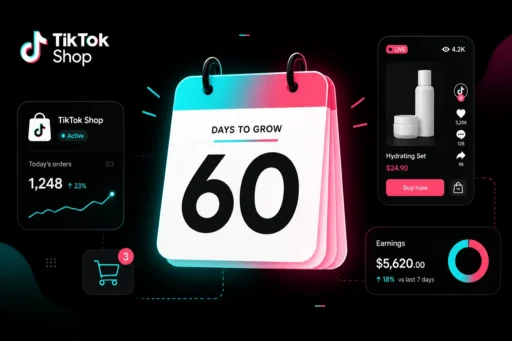
The single most important number for an Amazon seller to relearn: FBT claims expire 60 days from order creation. Not from delivery, not from discovery. Shipping-related losses get 90 days from delivery, covered up to retail value.
FBA's longer windows trained you that reconciliation can wait for a slow week. On TikTok there are no slow weeks inside the window. Set a monthly reconciliation cadence before launch, the way you'd set up bookkeeping — because retroactive recovery on expired claims is zero, forever, regardless of merit.
Step 4: Understand the refund regime before your first refund
Two things will surprise you:
Refund-without-return is routine for items around $10 and under — the buyer keeps the product, you fund the refund. If your catalog has low-ASP items or consumables, model this into unit economics before launch, not after the first ugly month.
Root cause determines who pays. A refund caused by buyer preference is your cost. A refund caused by a logistics failure belongs under TikTok's coverage — but nothing attributes root cause for you. Sellers who never ask "whose fault was this refund?" eat 100% of refunds by default. (What that costs a consumable brand in practice: $13,900 in one month.)
Step 5: Learn to read the settled statement early
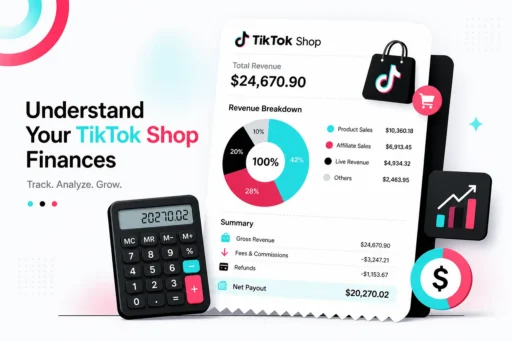
Your TikTok payout arrives via settled statements that won't map cleanly to Amazon's settlement reports. Learn the deduction lines in month one, while volume is small and anomalies are legible. Our line-by-line guide to payout deductions is the place to start. Statement errors are a real claim category; sellers who never read statements never find them.
Step 6: Assign ownership of recovery — to someone
On Amazon you have this handled: a provider, a tool, or a process sweeps the account. Know that your Amazon provider almost certainly doesn't cover TikTok Shop — as of mid-2026 none of the major ones publicly do. So at launch, the TikTok recovery seat is empty until you fill it: a disciplined DIY process, an agency, or a specialist. Whatever you choose, vet it with these seven questions. The benchmark from Amazon — 1–3% of revenue leaking unclaimed — is your planning floor here, with weaker auto-reimbursement pushing FBT-heavy accounts toward the high end.
The launch checklist, compressed
- Choose fulfillment knowing FBT's variance profile
- Document and verify every inbound shipment
- Monthly reconciliation cadence, calendared before launch
- Refund-without-return modeled into low-ASP unit economics
- Settled statements read line-by-line from month one
- Recovery ownership assigned — named person or named provider
Sellers who launch with this layer in place keep the margin the growth playbooks promise. Sellers who skip it grow GMV and wonder why the bank account lags the dashboard.
If you're already live and skipped some of this: the fastest way to size what it's cost you is a free audit — 24 hours, no commitment, a dollar figure for what's currently claimable before the 60-day window takes more of it.
Get your free TikTok Shop audit →
FAQ
Should Amazon sellers use FBT or their own 3PL on TikTok Shop? FBT offers FBA-like scale benefits with a younger network's error rates. Either works — the non-negotiable is reconciling whichever you choose, because FBT discrepancies are claimable but expire fast.
What's the biggest money mistake Amazon sellers make on TikTok Shop? Importing FBA timing assumptions. FBT claims expire 60 days from order creation, so the quarterly-reconciliation habit that works on Amazon permanently forfeits claims on TikTok.
How much should I budget for losses on TikTok Shop? Plan against the 1–3%-of-revenue unclaimed-reimbursement benchmark from Amazon as a floor — then reduce it with monthly reconciliation, since most of that leak is recoverable inside the claim windows.
When should I start auditing my TikTok Shop account? Before launch, ideally — set the cadence with your bookkeeping. If you're already live and have never audited, start now: every month unaudited, the oldest 30 days of claims expire permanently.