You have three ways to get a TikTok Shop order to a customer: pack it yourself, pay a 3PL, or hand everything to Fulfilled by TikTok. Pick wrong and you either bleed margin on fees, lose sales to slow shipping, or — the one nobody warns you about — lose inventory inside a warehouse network you can't see into.
We audit TikTok Shop accounts for a living, so we'll give you the comparison the enrollment pages won't, including what each model costs you when things go missing.
The three models in one minute
Seller-fulfilled. Orders hit Seller Center, you (or your garage, or your team) pick, pack, and ship. Total control, total responsibility.
3PL. A third-party logistics company holds your inventory and ships TikTok orders under your seller-fulfilled settings. You're still the merchant of record for fulfillment performance — the 3PL is just your hands.
FBT (Fulfilled by TikTok). You send inventory into TikTok's network — 14+ US fulfillment centers organized around East and West coast hubs, largely operated by subcontracted 3PLs — and TikTok stores, picks, packs, ships, and handles delivery-related customer service. (Full FBT breakdown here.)
Speed and the algorithm: FBT's real advantage
FBT delivers most orders within three days, and TikTok visibly rewards it: FBT listings get algorithm preference and Shopping Mall placement. On a platform where the algorithm is the traffic, that's not a tiebreaker — it's often the whole decision.
Seller-fulfilled and 3PL can match the shipping speed if your operation is tight, but they don't get the same platform-level preference. If you're competing in a crowded category, the FBT badge is doing work your ad budget would otherwise have to do.
Fees: who actually costs more?
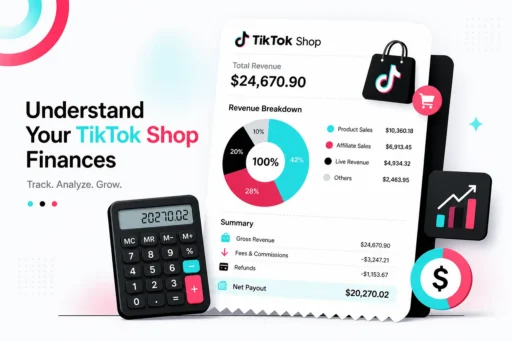
Seller-fulfilled looks free until you price your own labor, boxes, and the carrier rates you negotiate alone. 3PLs charge pick/pack and storage with full transparency — you signed the rate card. FBT charges fulfillment and storage fees on top of TikTok's standard selling fees, but is running a fee incentive program from April through September 2026 that makes the math unusually friendly right now. (We break the FBT fee math down here.)
The honest answer: at low volume, seller-fulfilled wins on cash. At scale, FBT under incentive pricing is frequently the cheapest per-order option — on the rate card. Which brings us to the cost that isn't on any rate card.
The cost nobody models: inventory you can't see
Here's the operator truth. With seller-fulfilled, you count your own shelves — if a unit vanishes, you know who to yell at (you). With a 3PL, you have a contract, an account manager, and recourse you negotiated.
With FBT, your inventory enters a subcontracted 3PL network and your visibility drops to whatever Seller Center shows you. Units go missing at receiving, in storage, and in returns processing. TikTok's coverage is genuinely decent on paper — logistics issues covered up to total retail value, and units that can't be restocked after a return are supposed to auto-reimburse — but receiving shortfalls, shrinkage, and vanished returns are not auto-detected. You find them and file, or you eat them. And FBT logistics claims expire 60 days from the order creation date. (The 60-day rule, explained.)
Across marketplaces, unaudited fulfillment leaks run 1–3% of GMV. We have yet to audit an FBT account with zero discrepancies. That doesn't make FBT a bad deal — it makes monthly reconciliation a line item in your FBT cost model, the same way storage fees are.
So which should you pick?
Seller-fulfilled if you're under ~20 orders/day, your product is fragile or premium-unboxing, or you're still iterating on packaging and inserts.
3PL if you need multichannel fulfillment (Amazon, Shopify, TikTok from one inventory pool), want contractual accountability, or your SKUs don't suit FBT.
FBT if TikTok Shop is a serious revenue channel, your product is standardized and mid-AOV, and you want the algorithm boost — and you commit to auditing your inventory monthly from day one. The 2026 incentive window makes this the cheapest time to test it.
Plenty of mature shops run a hybrid: hero SKUs in FBT for the badge and speed, long-tail and fragile SKUs fulfilled elsewhere.
Whichever you pick, audit it
If you're already on FBT, the relevant question isn't which model is best — it's how much the current one has quietly lost you. We run a free 24-hour audit of your FBT account, file every valid claim within TikTok's ToS, and take a percentage only of what we actually recover. One brand's first month: $30,800 back.
FAQ
Is FBT better than seller-fulfilled on TikTok Shop? For standardized products at volume, usually yes — FBT delivers most orders in three days and gets algorithm and Shopping Mall preference. For low volume, fragile goods, or brand-heavy packaging, seller-fulfilled keeps control and cash.
Can I use a 3PL for TikTok Shop instead of FBT? Yes. A 3PL ships under your seller-fulfilled settings, which works well for multichannel sellers — but you don't get FBT's algorithm preference or badge.
Does FBT cost more than a 3PL? It depends on your SKUs, but the FBT fee incentive program running April–September 2026 makes FBT unusually competitive right now. Model your specific per-SKU math before committing.
What's the biggest risk of switching to FBT? Inventory visibility. Discrepancies at receiving, in storage, and in returns aren't auto-detected, and claims expire 60 days from order creation — so unaudited accounts leak silently, typically 1–3% of GMV.